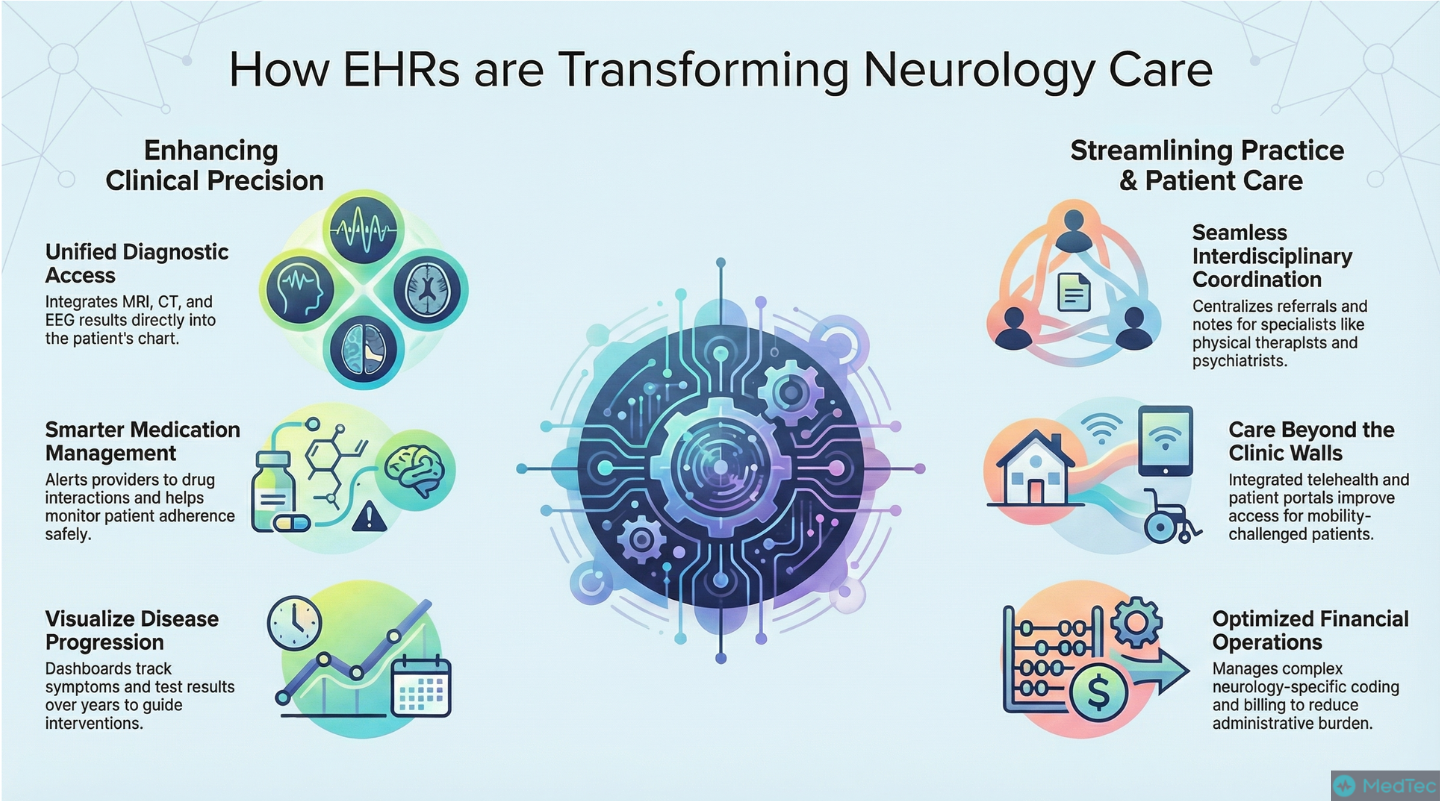
Neurology is one of the most complex fields in modern medicine, requiring detailed documentation, accurate long-term tracking, and seamless access to diagnostic information. From chronic neurological disorders to acute conditions, neurologists manage patients whose care relies heavily on imaging, testing, medication management, and multidisciplinary coordination. As the volume of neurological cases grows and treatment options advance, digital tools — particularly specialized Electronic Health Records (EHRs) — are becoming central to how practices deliver care.
The Increasing Complexity of Neurological Care
Neurological conditions often require years of consistent monitoring. Disorders such as multiple sclerosis, epilepsy, migraines, neuropathies, dementia, Parkinson’s disease, and stroke typically involve progressive changes that must be tracked over time. This creates a documentation burden that traditional methods cannot support effectively.
Neurologists must document subtle symptom variations, conduct repeated neurological exams, review imaging results, and update complex medication regimens. Without a structured and integrated system, providers risk fragmented records that make it difficult to compare past and current findings.
Modern EHR technology helps resolve these challenges by centralizing patient data and providing tools that support neurological decision-making.
Diagnostic Integration: A Cornerstone of Neurology Workflows
Neurology is heavily reliant on imaging and diagnostic procedures such as MRI, CT, EEG, EMG, nerve conduction studies, and lumbar punctures. Access to these results — and the ability to compare them over time — is essential for accurate assessment and treatment planning.
EHR systems designed for neurology allow test results and images to flow directly into the patient record. This immediate integration:
-
Reduces delays caused by manual uploads
-
Ensures data consistency
-
Supports longitudinal comparison
-
Improves collaboration with radiologists and other specialists
Neurologists benefit from having all diagnostic information accessible in one place, enabling more precise and timely clinical interpretations.
Enhancing Medication Management and Safety
Neurological conditions often require complex medication schedules involving anti-seizure medications, migraine treatments, immunomodulatory therapies, cognitive enhancers, and other agents. These medications may have significant interactions, require titration, or involve long-term monitoring for side effects.
EHR systems with built-in medication tools can:
-
Track medication history
-
Alert providers of potential interactions
-
Monitor patient adherence
-
Support controlled-substance requirements
-
Store response patterns for future reference
This improves both safety and treatment effectiveness, ensuring that medication decisions are informed by accurate and complete data.
Supporting Long-Term Condition Tracking
Neurological care is inherently longitudinal. Patients often undergo years of follow-up to evaluate disease progression, responses to treatment, and functional changes. EHRs built for neurology help make this process more organized.
Clinicians can track symptoms, diagnostic changes, imaging intervals, mobility scores, cognitive assessments, and lifestyle factors. Over time, these patterns provide valuable insights that support early detection of deterioration, helping guide timely interventions.
Long-term tracking dashboards allow neurologists to visualize disease trends, improving clinical clarity and supporting shared decision-making with patients.
Strengthening Interdisciplinary Care Coordination
Because neurological conditions often involve multiple systems and affect both physical and cognitive function, patients frequently require care from:
-
Primary care
-
Psychiatry
-
Physical therapy
-
Speech therapy
-
Occupational therapy
-
Pain management
-
Social work
Modern EHR platforms enable smooth communication across specialties by centralizing referrals, notes, imaging, and treatment plans. This collaborative approach helps prevent gaps in care and reduces duplicate testing — both critical factors for neurology patients with complex needs.
Telehealth as an Essential Tool for Neurology
Many neurology patients struggle with mobility, transportation, fatigue, or cognitive limitations. Telehealth offers a practical alternative for follow-up appointments, medication checks, and symptom monitoring. Modern EHRs now integrate video visits directly into the patient’s chart, supporting continuity without requiring patients to travel.
Telemedicine also benefits rural or underserved populations that lack access to neurology specialists. With remote care options, neurologists can reach more patients while maintaining documentation accuracy and workflow efficiency.
Improving Patient Engagement and Education
Neurological diagnoses can be overwhelming for patients and families. Access to educational resources, visit summaries, medication instructions, and communication tools helps patients stay engaged and informed.
Patient portals integrated inside the EHR give individuals access to:
-
Results
-
Care plans
-
Appointment tools
-
Medication lists
-
Secure messaging
These tools help bridge the gap between appointments, enhancing adherence and supporting better long-term outcomes.
Financial and Operational Advantages for Neurology Practices
Neurology billing is complex. Visits may involve extended evaluations, procedures, or diagnostic components. EHR systems with integrated revenue-cycle tools help practices manage this complexity by:
-
Supporting neurology-specific coding
-
Automating charge capture
-
Reducing documentation errors
-
Tracking claim status
-
Identifying workflow bottlenecks
Efficient billing tools reduce administrative load and support financial stability — an increasingly important factor as practices face rising patient volume and operational demands.
The Future of Neurology and EHR Technology
As technology evolves, neurology practices can expect stronger support from AI-driven tools, predictive analytics, automated documentation, and enhanced interoperability. These advancements will help neurologists deliver more precise, personalized care, while reducing manual workload and improving patient satisfaction.